
Soil and Site Prep Testing for Custom Home Foundations in Cullman & Smith Lake
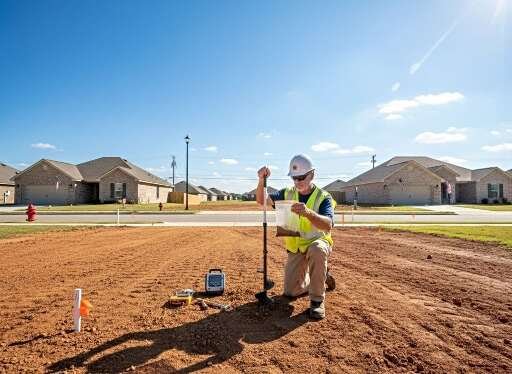
Hunter’s Ridge Construction is a licensed general contractor based in Cullman and serving Cullman and Smith Lake. We help custom home buyers understand soil, foundations, and site prep before they spend big money on plans or construction. Every project starts with an on‑site walk through and a clear written estimate, so you know what your lot needs and what it will cost.
You have found a lot in Cullman or a wooded spot overlooking Smith Lake. You have saved, planned, and now you are ready to build a custom home from the ground up. Floor plans fill your browser. Your Pinterest boards are full of ideas.
Before any of that becomes real, there is one step most buyers do not see, but it matters more than almost anything else.
The soil under your foundation decides if that dream home feels solid, dry, and level ten, twenty, even fifty years from now. The ground is not the exciting part. But it is the part that can quietly make or break the entire project.
That is why soil and prep testing in Cullman and Smith Lake AL sits at the top of our list for serious buyers.
We work on soil, foundations, framing, and full custom homes from the ground up.
During a site visit, we walk the lot with you, look at slopes, drainage paths, and access, and coordinate soil testing with local engineers when needed. Then we follow up with a written estimate so you can see the site prep, foundation approach, and ballpark costs before you decide whether the lot is worth it.
Good testing and smart prep can:
- Protect your budget from surprises
- Reduce delays in your timeline
- Give you peace of mind about what is under your feet
When we understand the soil, slope, and water on your lot, we can design the right foundation, plan for drainage, and build in a way that fits the land instead of fighting it.
If you want to see how this connects to real project costs, you can also read our Smith Lake foundation cost guide and our custom home framing costs in Cullman.
You are not just buying a lot. You are buying the soil, the slope, the water, and everything under that first shovel of dirt. When we respect that from day one, your custom home has a real foundation for the long haul.
Why Soil Testing Comes First Near Cullman and Smith Lake
Before you fall in love with a floor plan, you need to understand your soil. A custom home is a large investment. The dirt that holds it up should not be a mystery.
Cullman County and the Lewis Smith Lake area have many soil types packed into short distances. You can see:
- Red and brown clay
- Pockets of soft fill
- Limestone rock
- Steep slopes
- High water tables near the shoreline
A lot that looks perfect from the road can hide costly problems just a few feet below the surface.
Soil testing removes guesswork. Instead of hoping your lot will behave, you will know:
- Where the strongest ground is
- How water wants to move
- What kind of foundation your land will support
That knowledge lets us design your home to fit the site and helps protect every dollar you put into it.
How Local Soil Affects Your Slab, Crawl Space, or Basement
Across Cullman County, we see a lot of clay. Clay can act like a sponge. When it gets wet, it swells. When it dries, it shrinks and cracks. Around parts of Smith Lake, the soil layer can be thin over solid rock. Some lakefront lots have old fill dirt from past roads or shoreline work.
All of that matters for your foundation.
- Slab homes: Soft or expansive clay can make the slab move. This can lead to cracked tile, separated trim, and floors that feel off.
- Crawl spaces: Unstable soil under piers can cause sagging floors. Poor drainage can bring moisture under the house and into your framing.
- Basements: A high water table or poor backfill can let water push against the walls, which can lead to leaks or bowing over time.
Soil testing looks at how strong the ground is, how it holds water, and how deep we must go to find solid support. Then we can:
- Size footings correctly
- Adjust slab thickness
- Add piers or drainage where needed
That way, your foundation is based on facts, not guesses.
Once soil testing is complete, we can match your lot to the right foundation type and budget on Smith Lake and plan framing that makes sense for your design and site.
Preventing Costly Problems: Settling, Drainage, and Retaining Walls
You have probably seen:
- Driveways that slope one way at first, then seem to move the other way after a few seasons
- Yards that wash out after every heavy rain
- Retaining walls that lean forward like they are tired of holding the hill
Most of those problems started long before the concrete truck showed up. The soil was not compacted right. Water paths were not planned. The hillside behind the wall was never tested.
Soil and prep testing in Cullman and Smith Lake AL help us:
- Plan for proper compaction so fill dirt does not settle under your slab, garage, or driveway
- Design drainage paths, such as swales and French drains, to move water around your home, not through it
- Decide where retaining walls are really needed and how to build them so they last
A bit more time and money up front on evaluation often saves many thousands of dollars later. It also cuts down on change orders during construction, which is where many budgets go off track.
Soil and prep work are also a key part of how we plan full custom home remodels and builds in Cullman. We want your driveways, porches, and walls sitting on solid ground, not guesswork.
Permits, Septic Approval, and Local Rules
In Cullman County and around Smith Lake, soil testing is not just a smart idea. In many cases, it is required.
If your home is not on city sewer, the health department will usually require a perk test to approve a septic system. A perk test measures how fast water drains through the soil. If the soil drains too slowly or too quickly, the system design may need to change, or the field lines may need to move.
On many lakefront lots you may also see:
- Setback rules from the water
- Rules about how you cut into slopes
- Requirements for erosion control during construction
A proper soil and site review keeps you from drawing plans that will never pass review or trying to force a septic system into a spot that will not work.
Who Handles Soil Testing and Site Prep?
Homeowners often wonder who they should call first.
- A geotechnical engineer or soil testing company performs the actual soil tests and prepares the reports.
- Your general contractor or builder uses those reports to design foundations, driveways, drainage, and retaining walls that match the site.
- Local inspectors and health departments review plans and test results for code, septic approval, and erosion control.
At Hunter’s Ridge Construction, we coordinate with testing professionals and local offices, then turn the results into a clear plan you can understand. You do not have to manage all of those moving parts on your own.
How Soil Testing Connects to Foundations, Driveways, and Framing
Soil and prep testing is the first brick in the stack. It affects almost every major part of your new home:
- Foundations: Test results guide footing size, slab design, crawl space details, and drainage. They tie directly into what we cover in our foundation cost guide for Smith Lake homes.
- Driveways: Knowing soil strength and water paths helps us design driveways that do not crack or sink, like we explain in our driveway installation guide for Cullman and Smith Lake.
- Framing: When foundations and slabs are stable, framing stays square and true. You see that reflected in your walls, doors, and finishes. You can learn more in our custom home framing cost guide.
When we plan from the ground up, each step supports the next instead of fighting it.
Is Soil and Prep Testing Worth the Cost?
Many custom home buyers worry that soil testing and site prep are just “one more expense.” In most projects, they actually save money instead of adding to the bill.
- Catching poor soil or drainage issues early can prevent structural repairs later.
- A clear soil report reduces surprise change orders when crews hit unexpected ground conditions.
- Good site prep makes it easier to pour flat slabs, build stable walls, and keep water out of basements and crawl spaces.
In the full budget of a custom home, proper testing and prep are a small line item that protects some of the biggest ones, including your foundation, driveway, and framing.
What Happens During Soil and Prep Testing in Cullman and Smith Lake AL
The soil testing and site evaluation process is simpler than it sounds. When we walk clients through it step by step, it feels like a normal, easy part of the journey.
Walking the Land and Reading the Site
We always start with a simple walk.
If possible, we walk the lot with you. We look at:
- How the land falls. Does it slope toward the road or toward the lake?
- Any wet spots or areas where grass looks different, which can signal old fill
- Trees that could frame views and trees that stand where the house needs to go
We also think about real world use:
- Where concrete trucks and delivery trucks can get in and out
- Where a driveway makes sense
- Where a septic field can fit without fighting tree roots or steep slopes
That first walk gives us a big picture map before any machines touch the site. It helps us place the house, the driveway, and septic areas in spots that work with the land, not against it.
Taking Soil Borings and Perk Tests
Next comes the technical part, but we keep it simple for you.
For soil borings, a drill rig or portable auger takes samples at several spots around the planned house site and sometimes along the driveway and septic field. These borings often go 10 to 20 feet deep. They show the layers of soil and any rock below.
We look at:
- Soil type, such as clay, silt, sand, or fill
- Moisture levels
- How stiff or soft each layer is
For perk tests, we dig small test holes where the septic system is planned. We fill the holes with water and measure how long the water takes to soak in. That rate tells the health department if a standard septic field will work or if we need a different design.
All of this protects your home’s foundation and your septic system. We want your house solid and your bathrooms working without drama.
Lab Results, Engineer Review, and What They Tell Us
Once the samples leave your site, they go to a soil lab and sometimes a geotechnical engineer.
The lab tests give us numbers for:
- Bearing capacity, or how much weight the soil can safely support
- Presence of expansive clays that swell and shrink
- Depth of groundwater, which matters for basements and crawl spaces
A geotechnical engineer reviews these results and writes a report. The report might recommend:
- Deeper or wider footings
- Thicker slabs
- Specific types of fill dirt
- Undercutting and replacing poor soil
- Reinforced piers in certain areas
- Special drainage, such as perimeter drains or sump pumps for basements
We then sit down with you and your home designer to add these details into the building plans. That way, your foundation is based on your exact lot, not a one size fits all plan.
How Long Soil Testing Takes and When to Order It
Most of the field work happens in a single day. The drill rig, test pits, and perk tests usually wrap up by the afternoon.
The lab work and engineer’s report typically take about one to two weeks. During busy seasons, it can lean closer to two weeks, so we plan for that.
We encourage buyers to schedule soil testing right after going under contract on the land, during the due diligence period. That timing gives you options:
- If testing shows problems that are too costly, you may choose to walk away from the lot.
- If everything checks out, we use the results to fine tune your home plan and budget before you sign a build contract.
A week or two of patience at this stage often prevents months of delay and frustration later.
Key Steps in Site Preparation for Custom Homes in Cullman and Smith Lake
Once we know what is under the surface, we can turn raw land into a build ready homesite. Good site prep is quiet work, but it sets the tone for the entire project.
Clearing Trees, Brush, and Old Structures
We start by talking with you about what you want to keep.
Some trees add shade, beauty, and value. Others stand too close to the home, the driveway, or the septic system. We mark trees to save and trees to remove. In house and driveway areas, it is not enough to cut a tree at ground level. We remove stumps and large roots so they do not rot and create voids under concrete later.
On Smith Lake lots, we clear carefully near the waterline. Erosion is a real concern. We often:
- Keep a buffer of vegetation at the edge
- Install silt fence
- Plan paths or steps to the water in a way that protects the shoreline while still giving you access
If there are old sheds, trailers, or old driveways, we either remove them or work them into your new plan when it makes sense.
Rough Grading, Driveway Access, and Protecting Your Yard
Once the site is cleared, rough grading begins.
Heavy equipment shapes the land for the house pad, driveway, and basic water flow.
- On flatter Cullman lots, this may mean only modest cuts and fills.
- On steep Smith Lake properties, it can mean benching the slope to create a buildable terrace.
We also think ahead about access. Concrete trucks, framers, roofers, and delivery trucks all need safe ways in and out. On tight or steep lake lots, a poorly planned lane can turn into deep ruts and a torn up yard. We grade for a driveway that works for construction now and can become your permanent drive later.
Good rough grading also helps protect your future yard. By giving water clear paths to follow, we avoid standing water and mud pits around your foundation during framing and finish work.
Building a Solid House Pad: Compaction, Fill Dirt, and Drainage
Your foundation needs a pad that is stable and drains well.
In many cases, we cut higher spots and move that soil to lower areas. Then we bring in select fill where needed. Select fill is a type of dirt chosen for strength and how well it compacts. We spread it in thin layers, then compact each layer with heavy rollers or compactors.
On trickier sites or larger homes, we may:
- Test compaction with a density gauge
- Proof roll the pad with a loaded truck
Both help confirm the soil is firm enough for your foundation.
We also shape the pad and nearby ground with drainage in mind. The basic goal is for soil to slope away from the house a few inches over the first several feet. We may add shallow swales or surface drains to guide water away. Done right, rainwater finds an easy path around your home instead of into your crawl space or basement.
Planning for Utilities, Septic, and Lakefront Details
Site prep is also the right time to think about everything that will connect to the house.
We work with power, water, and gas providers to plan routes from the road or main lines to your home. Trenching for these utilities while grading is in progress often saves money, since machines are already on site.
For septic systems, we place the tank and field lines based on earlier perk tests. We try to keep lines clear of:
- Future driveways
- Patios
- Planned outbuildings
On lakefront properties, we add erosion control, such as silt fencing and straw, and protect the shoreline from heavy traffic as the build moves along.
By aligning utilities and septic work with grading and pad prep, we avoid tearing up a finished yard later or paying twice for digging.
Local Costs for Soil Testing and Site Prep Around Cullman and Smith Lake
Buyers often ask how much to budget for soil testing and site prep. Exact numbers depend on the lot, the home size, and current labor and fuel prices. Here are realistic local ranges for late 2025.
Skilled dirt work and equipment operators in our area often run $60 to $85 per hour, depending on the company and machine. Fill dirt and gravel often range from $20 to $35 per ton, delivered. Steep slopes, deep rock, long driveways, and tight access all push costs higher.
Typical Price Range for Soil Testing and Engineering
For a typical single homesite in the Cullman and Smith Lake area, most buyers can expect:
- Basic soil testing and report for a simple lot: around $900 to $1,800
Compared to the total cost of a custom home, this is a small slice of the budget that helps protect the entire investment.
What Site Prep Usually Costs for a Custom Home Lot
Site prep covers several tasks, such as:
- Clearing trees, brush, and stumps
- Rough grading
- Building the house pad
- Driveway base work
- Basic drainage and erosion control
In total, a custom homesite in the Cullman or Smith Lake area often sees $18,000 to $45,000 in site prep costs.
- Open, relatively flat pasture on good soil tends to fall near the lower end.
- Heavily wooded, steep, or rocky lakefront lots often land near the higher end.
How Smart Planning Keeps Site Work on Budget
Site work can feel like a big unknown, but smart planning gives you control. Some of the best steps we see buyers take are simple:
- Schedule soil and prep testing during your due diligence period, so you are not stuck with a lot that needs extreme repairs.
- Choose a house design that works with the land, instead of forcing a basement onto a lot that wants a crawl space or slab.
- Group tasks together, like grading, house pad, driveway base, and utility trenches, while the same equipment is on site.
- Ask your builder to include realistic allowances for soil testing and site prep in the first bid, not as vague extras.
We walk through these choices with our clients so they can build with clear eyes and fewer surprises.
Start With the Ground, Then Build the Dream
When we strip a custom home down to what keeps it standing, we always circle back to the soil and the way the land was prepared. A beautiful design on poor ground will never feel right. A simpler plan on a well tested, well prepared site will feel strong, dry, and solid for years.
By treating soil and prep testing in Cullman and Smith Lake AL as the first phase of construction, not an afterthought, you protect:
- Your budget
- Your timeline
- The comfort and safety of everyone who will live in the home
You are not just checking a box for permits. You are buying confidence every time you walk across a level floor or watch a storm roll through without a drop of water in your basement.
If you are ready to build on your lot in Cullman or around Smith Lake, now is the time to talk with a local builder who handles soil testing, engineering, and full site prep as part of a ground up process.
Share your land, your goals, and your questions. Together, we can make sure the part of your home you never see, the part under your feet, is every bit as solid as the dream you are building on top of it.
Ready to Talk About Soil and Site Prep in Cullman or Smith Lake?
If you are looking at a lot in Cullman or along Smith Lake and want to understand the soil, access, and site prep costs before you buy or build, we can help. We start with an on‑site walk through of your property, then provide a clear written estimate that outlines testing, prep work, and foundation options for your custom home. Call or text Hunter’s Ridge Construction at (205) 264-1220 or reach out through our contact form to schedule a visit. As an enlisted U.S. Army Infantry Veteran, I bring the same focus on planning, clear communication, and finishing the mission to every soil, foundation, and custom home project we take on.